NORTHERN RARE EARTH
NABISIPI REE PROJECT
Access & Location
-
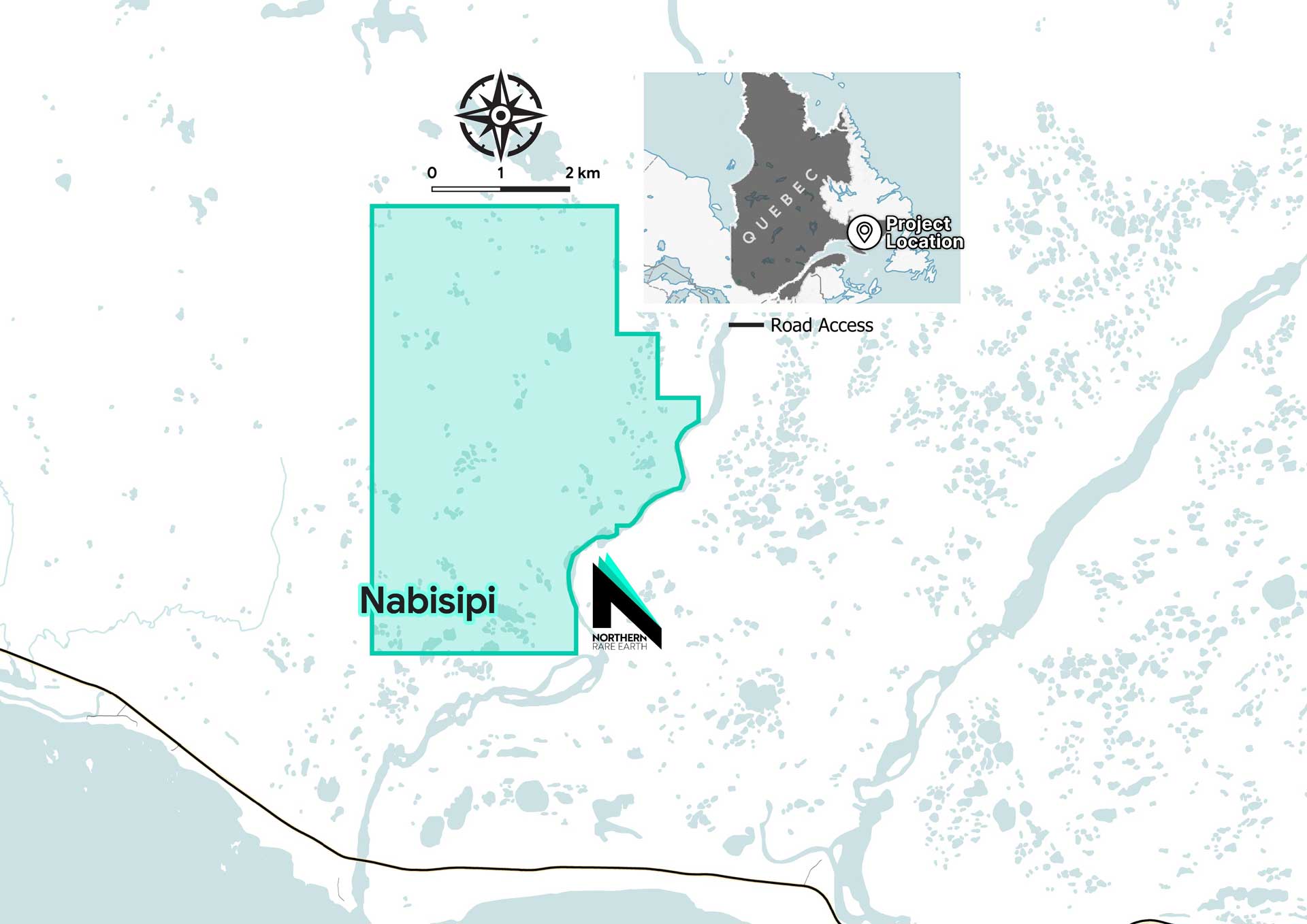
The Nabisipi REE project is situated in Québec’s North Shore Region, approximately 350 km east of Sept-Îles and 100 km east of Havre-St-Pierre. The nearest village, Aguanish, is 20 km east on the Gulf of St. Lawrence.
-
Access is convenient via the paved 138 Highway. A 6 km ATV trail allows an optimal access to most parts of the property. Additionnally, the property may also be reachable by boat on the Nabisipi River over a distance of 8 km.
-
Most necessary mining infrastructure is available nearby, including power lines, a deep-sea port, highways, an airport, and municipal services.
Geological Setting
-
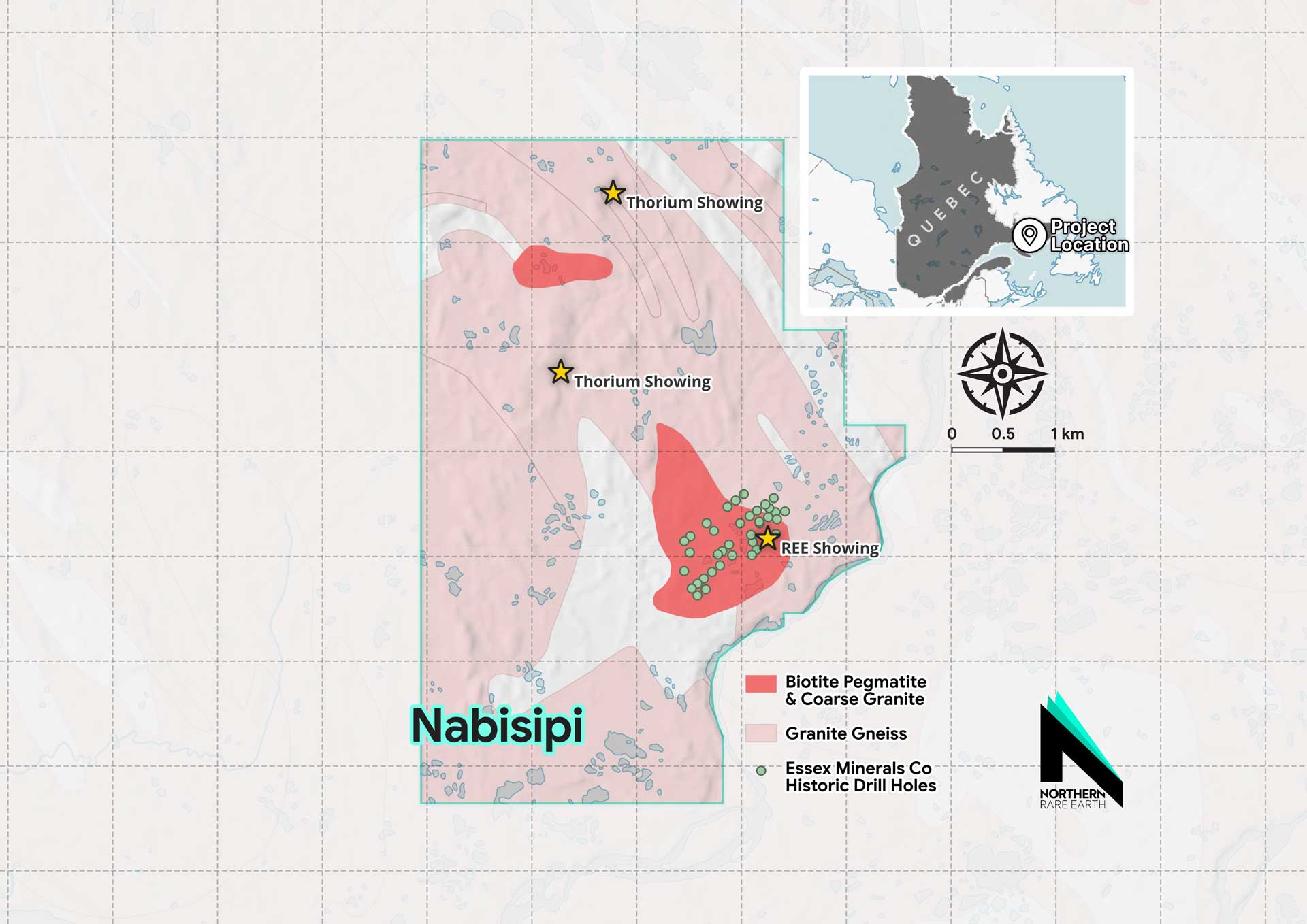
The Nabisipi REE project comprises 46 claims totaling 25 km2. encompassing all the favorable granite bodies.
-
Regional geology consists of augen granite gneisses, foliated granite gneisses, gabbros and metamorphised paragneisses.
-
All these older rocks are intruded and crosscut by fresh and undeformed irregular masses of biotite pegmatite and alkaline coarse red granite unit.
-
NNW folding is present in older rock formations.
2025 Sampling Program
-
A total of 531 outcrops were mapped and sampled using mostly rock saws for optimal sampling quality last fall of 2025.
-
Strong hematite and sericite alterations were observed throughout, giving the red colour to the biotite granite and pegmatite.
-
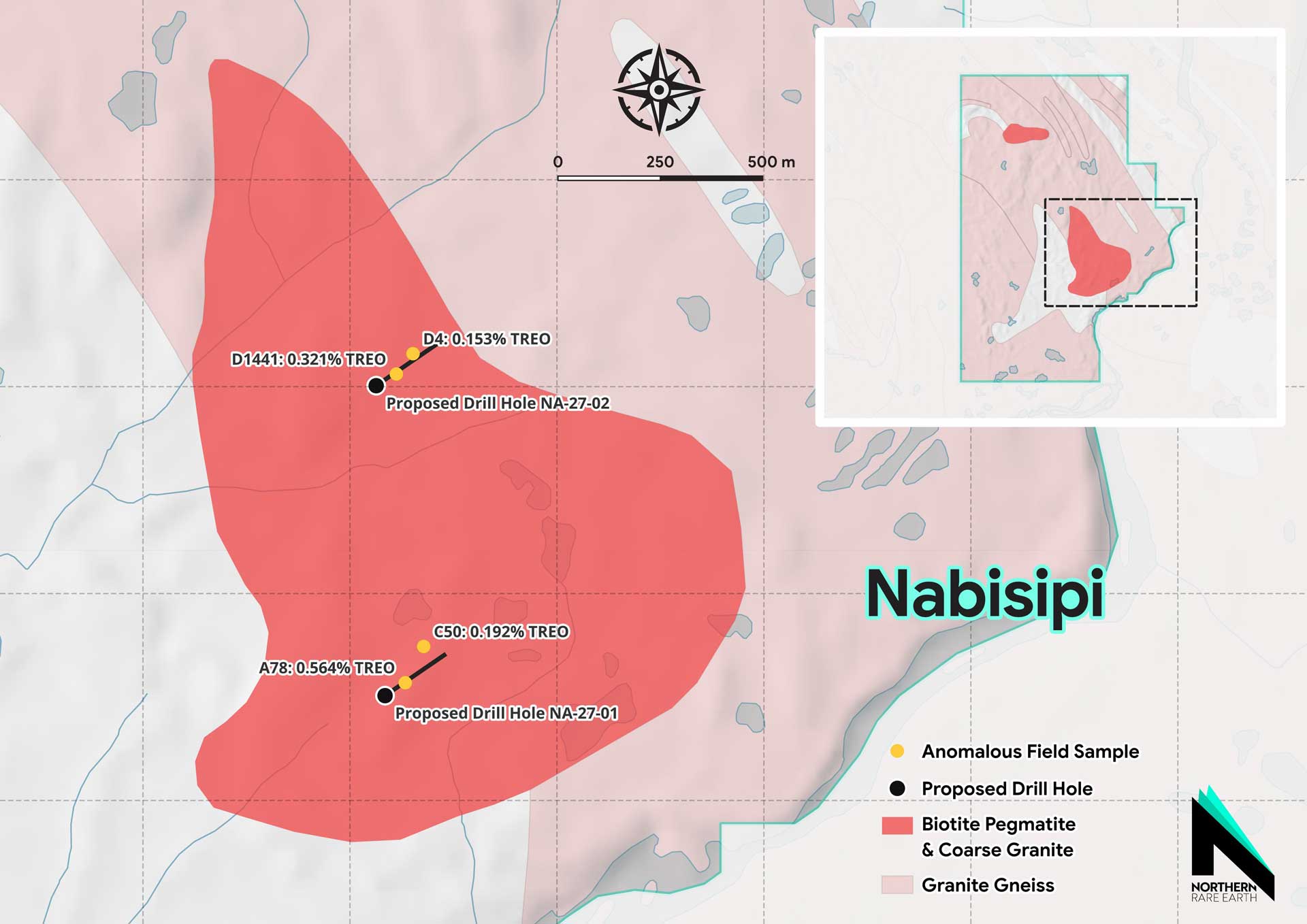
19 anomalous samples returned TREO grades over 0.1%, with the highest at 0.564% TREO from a pegmatitic granite — a new discovery made last Fall. These anomalous samples are preferentially aligned north-south near the western edge of the red granite.
-
2 diamond drill holes are proposed for testing the possible REE mineralization at depth as observed in the Essex drilling program of 1978.